

January-February 2010

The New Core Technology

Energy storage is part of the smart grid evolution.

Article Tools

Create a Link to this Article

Photo: Beacon Power Corp.

By Lyn Corum

1 Comments

The wide acceptance of renewable energy resources and their introduction into both utility and distributed generation mixes is mandating the development of new kinds of energy storage for a variety of reasons, the least of which is to smooth out generation delivery.

Energy storage can also reduce the amount of new generation and transmission capacity that would otherwise need to be built. It can help to relieve uncertainty in the power market by providing a scheduled resource, thereby helping consumers to avoid high prices, it can increase reliability and security and create new choices and opportunities for both consumers and investors.

Anaheim PUD Takes the Lead
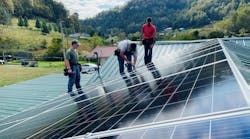
“The goal is to build a super-stable utility grid,” says Edward Murdock, the New Product Development Specialist for the Anaheim Public Utilities Department (PUD). He was talking about Anaheim’s two-year pilot project testing the 50-kW lithium ion energy storage system manufactured by iCel Systems Inc. It has been operating since last June. Two solar photovoltaic (PV) systems totaling 75 kW will feed power into the energy storage system, and during peak electricity usage periods the storage system will discharge the power into the grid. Both solar arrays are located near the energy storage system in a park where a 28-kW solar PV array was installed on a roof with an undulating architectural design that shades picnic tables. A second nearby 47-kW array is ground mounted.

Photo: Beacon Power Corp.
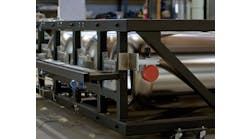
Beacon Power assembly supervisor, George King, lowering the one-ton carbon-fiber flywheel rotor into its housing.
Photo: Beacon Power Corp.
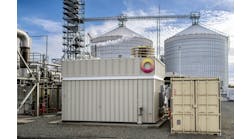
Two megawatts of flywheel energy storage installed adjacent to Beacon’s Tyngsboro, MA, headquarters

Murdock explains the grid is not growing for several reasons, including resistance from neighborhoods. Anaheim, CA, is tapping into renewable sources, it is rewarding conservation, and it is already offering incentives to commercial and industrial customers to turn on generators or shut off loads during peak periods. The utility would also like to offer incentives to customers who install solar systems to also install energy storage systems, including residential customers. Customers would be encouraged to dispatch stored energy when called upon by the utility.

During the pilot phase, the utility will be evaluating the dollar value of the $100,000 energy storage system in terms of the savings it brings to the utility. It will experiment with peak shaving, load shifting, and firming up power as it adds wind resources to its generation mix.

During the weekdays when electrical usage is at its peak at 7 pm, the stored energy is sent to the grid to supply additional power and flatten the peak loads. Energy is replaced in the batteries at night when power costs are at their lowest. On weekends, the load profile peaks during the day, so power is fed into the grid earlier.

Anaheim PUD is applying for grants, including federal Department of Energy stimulus money, to fund three combination solar/energy storage projects and a single energy storage unit. With enough energy storage systems connected to the grid, the utility would have a critical load supply serving as standby, Murdock says. The utility now has 100 customers sending power to the grid, and 28 new projects are in customers’ planning stages.

UCSD’s Microgrid Integrates Energy Storage
The University of California San Diego (UCSD) has fast become the very model of a microgrid community living with little need for utility power. The university, with 54,000 students, faculty and staff, is served by an onsite 42-MW peak load system that generates 80% of the electricity the campus depends on. Not satisfied, the university will add a 2.8-MW fuel cell paired with a 2.8-MW advanced energy storage system, sometime in 2010. Next Page >

What Do You Think?

Post a Comment

CharlieGoodman

January 12th, 2010 9:23 AM PT

Vanadium Redox Batteries seem to be ideal for utility-scale power systems of all sizes. Why are people still mucking about with air in caves and giant capacitors when the VRB has zero lose, instant charge/discharge and zero environmental footprint? Is it the cost of vanadium? If it is then that will change soon enough. A company named Energizer Resources just discovered the world's largest low-cost vanadium deposit last year in Madagascar. That deposit alone will guarantee supply and price for decades for the whole global market. I think everyone is missing the obvious solution in vanadium. Charlie Goodman

Post a Comment

Not a subscriber? Sign Up
 
 
*  


Get Distributed Energy Email Updates!

Get weekly news and updates through our Distributed Energy email newsletter!